
The Sowder Family in Virginia Circa 1734
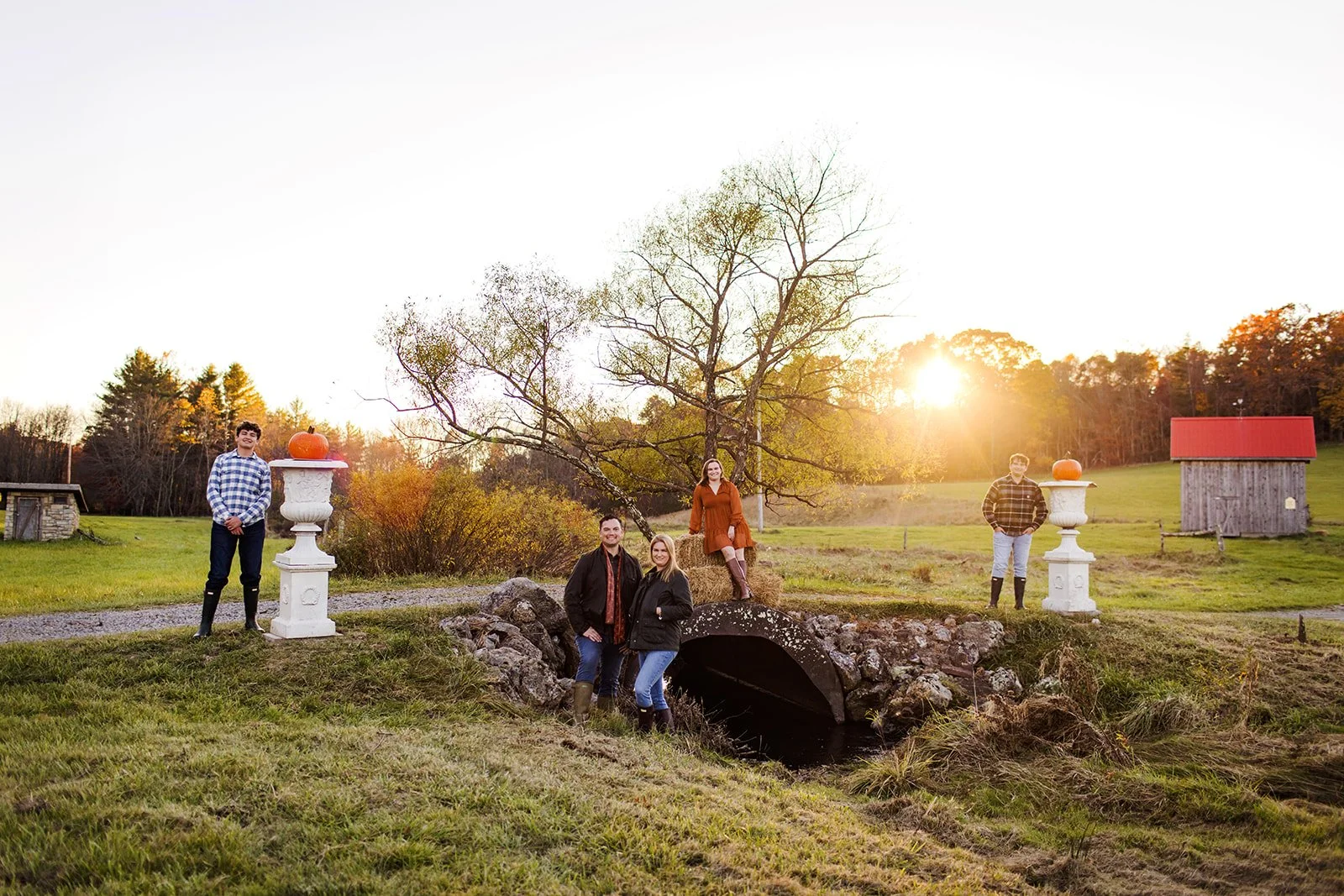
The Rev. Dr. J. “Adam,” Sandra Claire “Sandy”, Samantha, Teddy, and Henry Sowder
Our family motto Nolite errare misericordiam. “Do not err concerning mercy." (1 Corinthians 6:9-10)
A traditional rendering of this idea lives on in the familiar reminder: “Don’t mistake my kindness for weakness.”
A Virginia Family with Deep Roots
The Sowder family story in Virginia begins around 1734, when the Crown—under George II of Great Britain—granted land in what was then Montgomery County, an expansive frontier region that would later include present-day Floyd County, Craig County, and numerous others.
The Sowder surname itself is historically linked to the Old English and Germanic root meaning “Shooter”—a name associated with marksmanship, archery, and frontier skill. This meaning echoes throughout the family’s Appalachian heritage and can still be seen today in heraldic symbols connected to the name.
From these rugged beginnings emerged the family’s first American patriot, Jacob Sowder, who endured the winter at Valley Forge during the American Revolution. The family’s broader frontier heritage includes connections to Daniel Boone and General Daniel Morgan. Ongoing genealogical study also points toward other notable early colonial families, including the Lee family of Virginia and the West/de La Warr line—connections consistent with the patterns of movement and intermarriage in colonial Virginia.
From the Frontier to the Old World
Genealogical study reveals that the Sowder line stands within a wider heritage. Through Adam’s paternal line, the family shares ancestral ties to the Lawson Barony and Brough Hall in Yorkshire, England—a historic estate whose architectural spirit finds quiet echoes in the family’s own home, Highclere Hall in the Virginia Highlands.
Tracing this English lineage further leads into the broader tapestry of the Royal House of Plantagenet, whose legacy shaped much of medieval Britain.
On Adam’s maternal side—the Bilyeu (“Gentle Wolf”) family, French Huguenot gentry with ties to the petite noblesse (minor nobility)—the story widens again. Adam and his mother, Lorena Era Iona Bilyeu, share mitochondrial ancestry with Marie Antoinette and the Habsburg lineage, a reminder that history’s great houses and humble homesteads often intersect in unexpected ways.
The French Bilyeu ancestors later became part of the great American westward movement, participating in the Oklahoma Land Rush, where their descendants still ranch today—carrying with them the values of perseverance, stewardship, and wide-open possibility.
Today
Dr. Arvid Myklebust and Joan Ferrari gifted the farm to Sandy and Adam for future generations of the family. The 1845 house, first owned by Benton Wiley, was near abandoned in the 1980s with stories of sheep and cows wandering its hall. After several owners, Arvid and Joan took possession of the property and gave the farm new life by restoring it. This restoration, preservation, and development continues under the stewardship of our family today.
Though the Sowder farm—Highclere Hall, in the Virginia Highlands—is far more modest than the storied family seats that precede it, it reflects the same enduring values:
faith, family, land, hospitality, and the work of one’s own hands.
Here, amid rolling hills, Highland cows, and creaking halls, the ancient and the everyday meet. The past is honored, the present is lived fully, and the future is shaped with purpose.
Meet Adam
J. Adam Sowder, Owner and Steward of Highclere Hall LLC, provides strategic oversight for the care and development of Highclere Hall as a working farm estate and place of hospitality. He holds a Doctor of Ministry, with doctoral studies in Transformational Leadership, including academic study in Cambridge, England, and brings experience in mentoring, teaching, and leadership formation. His approach integrates compassion with strategy, thoughtful governance, and care for people, place, and purpose.
Ancestral Homes
-

Highclere Hall, Virginia
-

Brough Hall, Yorkshire